“It’s not all in your head. It’s in your nervous system.”
Maybe you’ve felt it too…
That rush of anxiety before anything even happens.
The brain fog that rolls in right before a meeting.
Or how you crash every afternoon—even when you’ve eaten “healthy.”

These aren’t just random symptoms. They’re messages from your body—signals that something deeper is going on. When we think about trauma, we often picture emotional pain. But what if we told you that trauma also affects your blood sugar, your hormones, and even your mood—decades after the event? Welcome to the interconnected world of trauma physiology, where the nervous, endocrine, and metabolic systems all speak the same language: survival.
Let’s unpack how trauma isn’t just a psychological event—it’s deeply physiological, involving pathology, neurobiology, chemistry, and chronic stress physiology. Everything that happens to you affects your nervous system, your blood sugar, and, in turn, your mood.
They’re the effects of chronic stress, trauma, and a nervous system stuck in survival mode.
Before we dive into the science, let me introduce myself—because this isn’t just what I do.
It’s what I’ve lived.
My Story: Why I Created Intentionally Healed®
For a long time, I thought I was broken.
I was tired all the time. I’d crash mid-afternoon, crave sugar like my life depended on it, and spiral into anxiety over the smallest things. I was stuck in a cycle of people-pleasing, emotional shutdowns, and then guilt for not “handling life better.”
Sound familiar?
It wasn’t until I hit rock bottom that I realized:
My body wasn’t failing me—it was protecting me.
What I didn’t know at the time was that I was living in a chronic mix of fawn, freeze, and flight trauma responses.
I had an ACE score of 8. I grew up in an environment where emotional and physical safety weren’t guaranteed. Later, I navigated the emotional toll of my husband’s military career—the hypervigilance, the fear, the post-deployment aftermath. Add to that complex trauma from relationships within his family, and it felt like my nervous system never had a chance to breathe. Then he left the military after 15 years of service and started medical school. This is where we are in life right now. I didn’t realize how difficult it would be to leave behind our life in the military. I now know that the difficulties that I faced are common for spouses. Being a military spouse was part of my identity, and it was taken away from me. Thankfully, I still have Intentionally Healed® that keeps me connected to the military special operations community that was once part of my everyday life.
Stress comes in many forms—psychological (thoughts, emotions, trauma), chemical (blood sugar swings, inflammation, medications, toxins), environmental (noise, light, mold, temperature), physical (overtraining, injury, poor sleep), and relational or social stress. From a physiological standpoint, the body does not distinguish the source. All stress is processed through the nervous system and the hypothalamic–pituitary–adrenal (HPA) axis. Whether you are running from a bear or reliving a threatening memory, the brain interprets danger and activates the same survival cascade: adrenaline and cortisol rise, glucose is released from the liver, digestion and repair shut down, and resources are diverted toward immediate survival. This response is lifesaving in an acute emergency, but when it is triggered repeatedly by modern stressors, the body remains in a chronic state of activation that gradually disrupts blood sugar regulation, hormones, immune balance, and mood.
Stress comes in many forms—psychological (thoughts, emotions, trauma), chemical (blood sugar swings, inflammation, medications, toxins), environmental (noise, light, mold, temperature), physical (overtraining, injury, poor sleep), and relational or social stress
Early childhood experiences strongly shape how the brain defines “threat.” During development, the nervous system learns patterns based on environmental safety or unpredictability. If a child grows up with chronic stress, neglect, or trauma, the brain adapts by becoming more vigilant—an effective survival strategy at the time. In adulthood, those same adaptations can show up as anxiety, hyperarousal, fatigue, or emotional reactivity, even when no present danger exists. Layered on top of this is generational trauma, where epigenetic changes influence stress biology passed down through families, lowering stress tolerance before life even begins. Genetics further modifies this response. For example, a slow COMT pathway reduces the body’s ability to break down catecholamines like adrenaline and stress-related dopamine, allowing cortisol and adrenaline to remain elevated for more extended periods. This prolongs nervous system activation and makes recovery from stressful events more difficult for some individuals—not because they are weak, but because their biology clears stress signals more slowly.
No matter how calm my life looked on the outside, inside, my body was bracing.
No one ever connected my history of trauma to what was happening in my body:
Mood swings
Hormonal chaos
Crippling fatigue
Blood sugar crashes
Anxiety
Inflammation
Feeling completely disconnected from myself
You can read more about my (Christina) story in these other blogs that I have written here https://intentionallyhealed.com/the-life-of-a-military-spouse/
In the 1950s, endocrinologist Hans Selye introduced the idea of the General Adaptation Syndrome—a three-stage model (alarm, resistance, exhaustion) explaining how the body responds to chronic stress. His work laid the foundation for understanding what we now call HPA axis dysregulation (Hypothalamic-Pituitary-Adrenal axis), the body’s hormonal command center for stress.
Under chronic stress, the HPA axis gets stuck in overdrive. Cortisol and adrenaline flood the body, preparing you for survival. But this comes at a cost—especially to your blood sugar, mood, and immune system. In the late 1990s, the Kaiser Permanente-CDC Adverse Childhood Experiences (ACE) Study shocked the world. It linked childhood trauma—like abuse, neglect, or household dysfunction—with higher risks for chronic illness, depression, and metabolic disorders in adulthood.
The Body can Literally Keep a Trauma Score — and Speaks Loudly

Trauma isn’t always a single event. Sometimes, it’s years of being on alert. Years of not being seen, not being safe, not being supported.
That kind of survival rewires your body—especially your Autonomic Nervous System, which controls everything from heart rate and digestion to blood sugar and hormones.
Your Autonomic Nervous System (ANS) includes two main branches:
Sympathetic (“fight or flight”): Heart rate increases, digestion slows, blood sugar spikes to provide quick energy.
Parasympathetic (“rest and digest”): Promotes healing, digestion, and blood sugar storage via insulin.
In a healthy system, you cycle between both. But under chronic stress or trauma, you may become sympathetic-dominant—leading to:
Anxiety
Insomnia
Cravings for sugar/carbs
Inflammation
Blood sugar crashes
Unprocessed trauma shows up as:
Exhaustion
Gut issues
Irritability
Panic attacks
Sugar cravings
Brain fog
Emotional numbing
Feeling like you’re not fully here (aka dissociation)
These aren’t personality flaws. They’re adaptations.
Your body is saying, “I’m doing my best to survive.”
The Stress Response: Fight, Flight, Freeze & Fawn
When your brain detects a threat—whether past or present—it activates the stress response. Here’s how that might be playing out in your body today:
Fight
Your body gears up to fight danger.
Symptoms: Anger, irritability, jaw clenching, sugar cravings, high blood pressure.
Flight
You try to outrun the danger.
Symptoms: Anxiety, restlessness, perfectionism, overworking, digestive issues.
Freeze
You shut down to survive.
Symptoms: Brain fog, fatigue, dissociation, slow digestion, emotional numbness.
Fawn
You stay safe by keeping everyone else happy.
Symptoms: People-pleasing, chronic guilt, low self-worth, mood swings, codependency.
Dissociation: Your Brain’s Emergency Exit
Often tied to freeze/fawn states.
Symptoms: Feeling detached, “spaced out,” memory gaps, not feeling real, chronic fatigue.
My Healing Wasn’t Linear—It Was Layered
I wish I could say one therapy fixed everything. But healing from trauma requires a multi-layered approach—especially when it’s been stored in the body for years.
Here’s what helped me begin to truly heal:
- EMDR Therapy
Helped me safely reprocess early trauma and military-related PTSD.
- Ketamine-Assisted Therapy
Offered deep emotional breakthroughs when talk therapy wasn’t enough. It gave me the mental pause I needed to stop reliving trauma on a loop.
- Nutritional Therapy
Stabilized my blood sugar, regulated my mood, and gave my body the nutrients it was starved for after years of stress.
- Dual Stellate Ganglion Block (SGB)
A powerful “neuro reset” that brought profound relief. For the first time in decades, I could feel my body relax. No more bracing. Just being. If you are a special operations spouse who is looking for more resources, check out this blog https://intentionallyhealed.com/nonprofits-for-military-families/. While this list is not extensive, it can be a starting place for you to begin your healing process.
Why I Started Intentionally Healed®
I built Intentionally Healed® for the person I used to be.
Exhausted, confused, gaslit by labs that came back “normal” when nothing felt normal. It is important to note that there is a SIGNIFICANT difference between conventional standards of NORMAL and what is OPTIMAL. At Intentionally Healed® we use the optimal levels for serum labs because we want you to aim for feeling your best self.
There was no one connecting:
My trauma history
My nervous system state
My blood sugar rollercoaster
My chronic fatigue and mood swings
So I decided to become the person I needed—bringing trauma-informed care, functional testing, and nervous system healing together in one space.
When Trauma Affects Blood Sugar, Hormones & Mood
Here’s what science confirms—and what I lived:
Under chronic stress or trauma:
Cortisol spikes → Your liver dumps glucose into your bloodstream.
Glucagon rises → Your body breaks down stored glycogen.
Insulin becomes resistant → You crash, crave, repeat.
And when this cycle happens every day, you end up with:
Blood sugar instability
Hormonal disruption
Anxiety, burnout, mood swings
Intentionally Healed® was built on a simple but often overlooked scientific reality: the body does not separate psychological stress from physiology. Trauma and chronic stress activate the hypothalamic–pituitary–adrenal (HPA) axis, keeping the nervous system in a prolonged fight-or-flight state. When this happens, cortisol and catecholamines signal the liver to release glucose to prepare for danger. This response is adaptive in the short term, but when stress is ongoing, blood sugar regulation becomes unstable. Over time, repeated cortisol exposure promotes insulin resistance, disrupts circadian hormone signaling, and impairs mitochondrial energy production. What looks like “random” fatigue, anxiety, or mood swings is often the predictable downstream effect of a nervous system that has learned it is not safe to power down.
This is where many people recognize themselves. Blood sugar swings drive cortisol, cortisol drives hormone disruption, and unstable hormones feed back into mood, sleep, and energy regulation. Low or fluctuating glucose availability in the brain affects neurotransmitter synthesis, including serotonin and dopamine, while chronic inflammation further alters stress sensitivity. The result is a loop: stress alters metabolism, altered metabolism worsens mood and fatigue, and the body stays stuck in survival mode. Intentionally Healed® exists to interrupt that loop by addressing trauma history, nervous system regulation, and metabolic stability together—because healing is most effective when the brain, hormones, and blood sugar are treated as one integrated system rather than isolated symptoms.
Testing That Tells the Truth
At Intentionally Healed®, we use real data to uncover what your body’s been trying to tell you for years:
Mosaic Labs Functional Testing
We test for:
- Adrenal hormones
- Neurotransmitter imbalances
- Gut + inflammation markers
- Detox pathways
- Oxidative Stress
This gives us a biochemical snapshot of how trauma is living in your body today.
MaxGen Labs Nutrigenomics Testing
Your genes don’t predict your destiny, but they show us how you process:
- Stress
- Methylation (mood, focus, detox)
- Inflammation
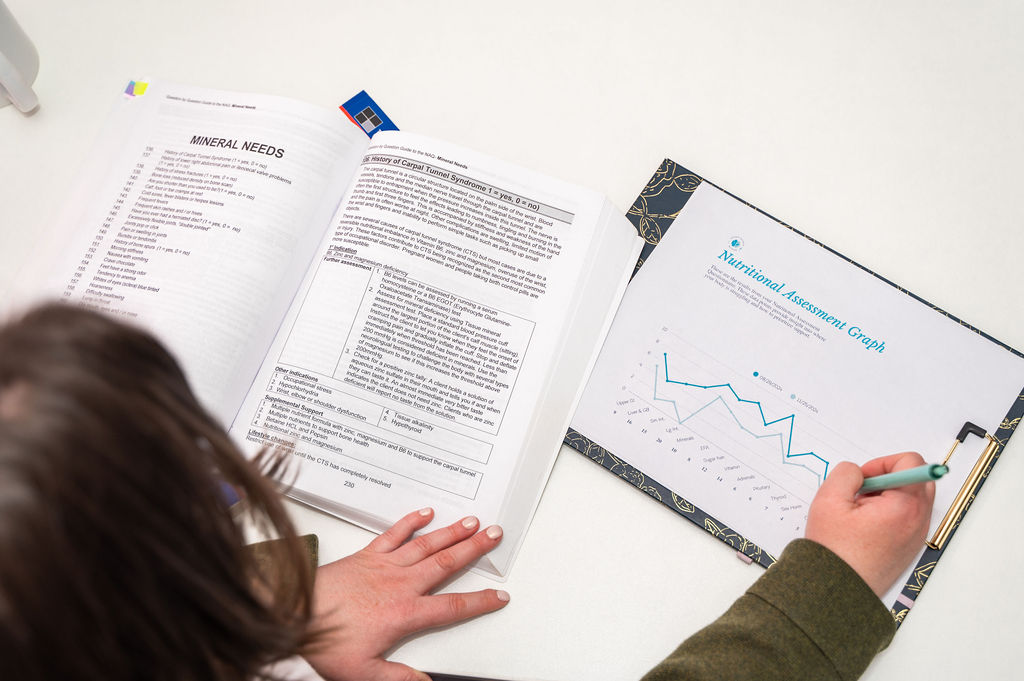
Nutrition Assessment Questionnaire (NAQ)
A powerful tool to assess:
- Blood sugar balance
- Stress
- Fatty Acid imbalances
- Digesstion
- Trauma-linked dysfunction in digestion, mood, and energy
These tools help us create personalized care plans that support your healing at every level.
How We Help You Heal
At Intentionally Healed®, we don’t believe in one-size-fits-all plans or surface-level advice. We meet you where you are—emotionally and biologically.
Our trauma-informed approach includes:
- Nervous system support (breathwork, grounding)
- Nutrition that supports adrenals and stabilizes blood sugar
- Movement that calms—not overtaxes—the body
- Functional supplements based on your data
- Tools for long-term self-regulation and resilience
Rethinking Food & Fitness When You’re Stuck in Survival
If you’re stuck in a freeze or flight state, the advice to “eat less and move more” can actually backfire.
That’s why we focus on:
Blood sugar stabilization, not restriction
Meals with protein, fat, and fiber
Nervous system-friendly movement (not cortisol-spiking workouts)
Meal timing to prevent energy crashes and emotional lows
You’re Not Broken—You’re Adapted
If you’ve been carrying your story in silence…
If your symptoms don’t “make sense” to anyone else…
If you’ve tried everything and still feel stuck…
I see you. I was you.
And I want you to know:
Healing isn’t about fixing you—it’s about finally listening to you.
You can calm your nervous system.
You can regulate your blood sugar.
You can feel safe again—in your body, in your life, in your future.
Ready to connect the dots between trauma, stress, mood, and metabolism? If you have made it this far and any of this is resonating with you, we would love to help you. Book a call with Christina or Kelly today by using this link https://l.bttr.to/rCXEd it is a free call where we can help assess your needs.
Trauma changes how the body functions, but it does not mean the body is broken—it means it has adapted to survive. When we understand that blood sugar instability, hormone disruption, fatigue, anxiety, and mood swings are often rooted in nervous system dysregulation and chronic stress physiology, the path forward becomes clearer. Nutrition is one of the most practical and powerful tools we have to support healing because it directly stabilizes blood sugar, lowers unnecessary cortisol output, supports neurotransmitter production, and gives the nervous system the raw materials it needs to shift out of survival mode. When food is used intentionally—alongside trauma-informed care and nervous system regulation—it becomes a signal of safety to the body. Healing does not start with willpower or pushing harder; it begins with restoring physiological stability so the body can finally do what it has been trying to do all along: protect you, regulate itself, and move toward true resilience.